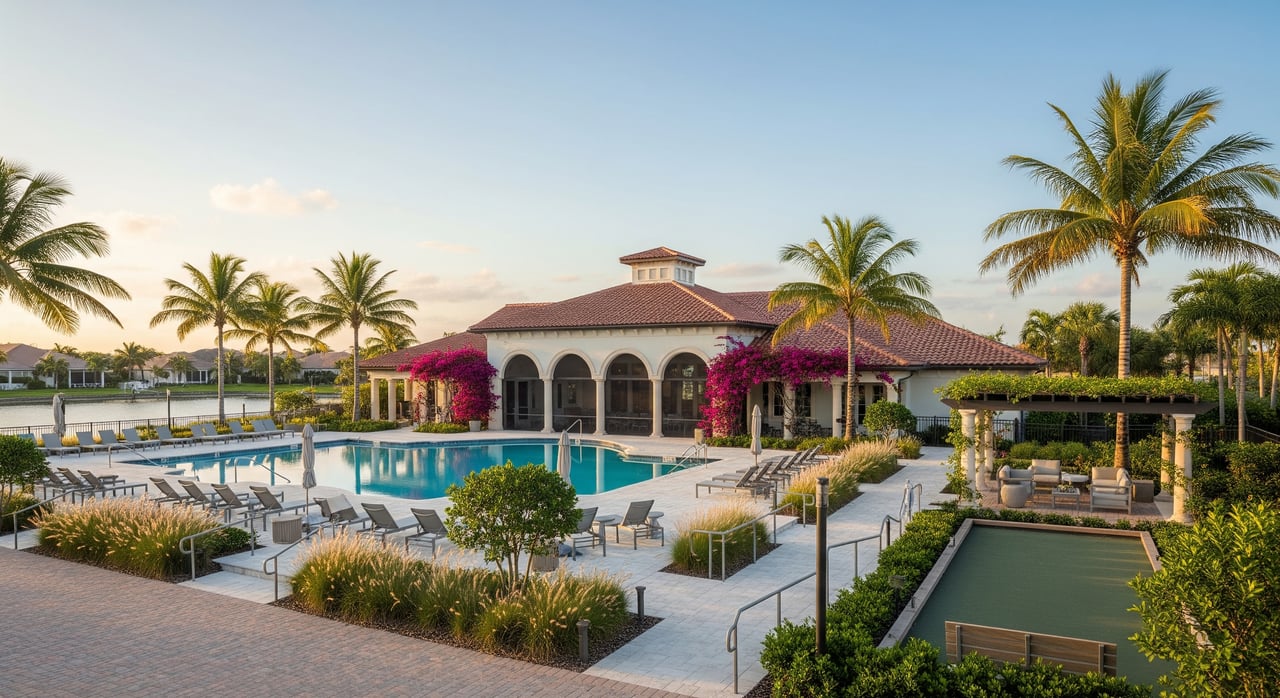
Thinking about a 55+ community in Boynton Beach but not sure how they work or what they really cost? You are not alone. Choosing the right age-restricted neighborhood is part lifestyle and part financial decision, and it pays to understand the rules before you shop. In this guide, you will learn how 55+ housing operates under federal and Florida law, what to expect locally in Palm Beach County, typical fees and approval steps, and a practical checklist to compare communities with confidence. Let’s dive in.
What “55+” means under HOPA
Age-restricted or active adult communities operate under the federal Housing for Older Persons Act, often called HOPA. To qualify, at least 80 percent of occupied homes must include at least one resident who is 55 or older. Communities must publish and follow policies that show they intend to operate as 55+ housing, and they must verify ages and keep records.
In Florida, many 55+ neighborhoods are governed by associations. Condominium associations are regulated under Chapter 718, cooperatives under Chapter 719, and homeowners’ associations under Chapter 720 of the Florida Statutes. These laws address budgets, reserves, disclosures, and governance. When you buy, you should receive association documents that outline the rules, fees, and financials.
Community types in Boynton Beach
You will find a range of 55+ options around Boynton Beach and greater Palm Beach County. Common formats include:
- HOA-managed single-family subdivisions with shared amenities.
- Condominium associations, from garden-style to larger buildings.
- Manufactured-home communities with age restrictions.
- Master-planned active adult developments with clubhouses, fitness programs, and social calendars.
Each format offers a different mix of maintenance, amenities, and monthly fees. Decide what lifestyle you want first, then match communities to that vision.
Amenities and lifestyle options
Amenities vary widely. Popular features include pools, clubhouses and social rooms, fitness centers, walking paths, and courts for tennis or pickleball. Many communities host organized clubs and classes, and some offer on-site management, gated entry, or lawn and exterior maintenance. Select neighborhoods run shuttle services to local shopping or medical centers.
The level of services drives the monthly fee. Low-amenity communities tend to have lower dues. Full-service, resort-style properties with robust programming typically carry higher dues.
Rules you should review
Before you write an offer, read the association rules. Focus on:
- Age and occupancy rules, including how the community maintains HOPA compliance and how it verifies ages.
- Guest and child visitation policies. Younger visitors are usually allowed, but many associations limit extended stays by anyone under 55 to protect the 80 percent rule.
- Pet policies, such as size, breed, number, and registration requirements.
- Rental rules. Many 55+ communities restrict or prohibit short-term rentals and require board approval for leases.
- Architectural and modification standards, including the process to add accessibility features like ramps or grab bars.
- Vehicle and parking rules, landscaping responsibilities, and exterior appearance standards.
- Assessment provisions and enforcement, including how fines are used and how disputes are handled.
Costs you should plan for
Pricing and monthly costs vary by property type, amenity level, and age of construction. A few key line items to budget for:
- HOA and condo fees. These typically cover common-area maintenance, landscaping, pool or clubhouse operations, and sometimes cable, internet, or basic utilities. Fees can change over time and may increase if reserves are inadequate.
- Special assessments. If reserves are underfunded or major projects arise, owners may be assessed. Review reserve studies and board minutes to understand risk.
- One-time transaction fees. Expect application and processing fees for board approval, plus a resale or estoppel certificate fee required for closing. Specific amounts vary by association and are governed by Florida law and association policies.
- Insurance. Homeowners’ insurance can be a significant expense in coastal Florida. Condo owners should understand what the master policy covers versus what the unit owner must insure. Flood insurance may be required if the property is in a FEMA flood zone.
- Property taxes. Palm Beach County taxes are based on assessed value. Eligible owners may apply for homestead and other exemptions through the county.
- Financing considerations. Lender guidelines can depend on project factors such as reserves, litigation, and owner-occupancy rates. FHA or VA loans require project approval in many condo settings. Reverse mortgages are available only for borrowers age 62 and older.
Local risks and considerations
- Flood risk. Parts of Boynton Beach and coastal Palm Beach County lie in FEMA-designated flood zones. If your lender requires flood insurance, obtain quotes early to understand total carrying costs.
- Hurricane and wind mitigation. Impact-rated windows, shutters, and other mitigation features can affect insurance premiums. Confirm what is installed and what is required.
- Sea-level rise and storm surge. Coastal properties may face longer-term resilience considerations. Factor potential flood risk into your decision.
- Heat and humidity. Outdoor amenities may be seasonal for comfort. Inspect HVAC systems and insulation to ensure year-round usability.
- Healthcare and services. Many buyers value proximity to medical centers along the I‑95 corridor, access to public transit and Tri-Rail, and availability of local senior services or in-home care. Check what is practical from each community you consider.
Approval and timeline
Most 55+ communities require buyer approval. Expect a process similar to this:
- Confirm eligibility for all occupants based on the community’s age and occupancy rules.
- Submit the association application with age verification, background and credit checks, references, and applicable fees.
- Undergo management or board review. Some communities also schedule an interview. Timelines can range from a few days to several weeks.
- Obtain the estoppel or resale certificate for closing. This document reports current fees, assessments, violations, and financial status.
- Close and notify the association as required by the governing documents.
Build buffer time into your purchase plan. Association approvals and estoppel delivery are essential gatekeepers for closing.
Due diligence checklist
Use this list to reduce surprises and protect your investment:
- Governing documents: declaration or CC&Rs, articles, bylaws, and rules.
- Current budget and most recent financial statements.
- Reserve study and the funding plan approved by the board.
- Board meeting minutes for the last 6 to 12 months.
- Insurance certificates, including master policy limits and deductibles.
- Pending litigation disclosures involving the association or developer.
- Estoppel or resale certificate with a detailed fee breakdown.
- Management contract and key vendor agreements, such as landscape or security.
- HOPA compliance procedures and age verification records.
- Records of recent special assessments or major capital improvements.
Beyond documents, visit at different times of day, observe activities, and talk to residents when possible to understand governance and day-to-day maintenance.
Smart questions to ask
- Is the community currently HOPA compliant, and how are ages verified?
- What percentage of occupied homes include a resident who is 55 or older?
- What are the current monthly dues, what do they include, and are increases planned?
- Is there a current reserve study, what is the funding level, and when was the last special assessment?
- Are rentals allowed, and if so, what are the minimum lease terms and approval steps?
- What are the pet policies and any size or breed limits?
- Are there lawsuits pending against the association or developer?
- What insurance does the association carry, and what must the unit owner insure?
- How does the association handle accessibility modifications for aging in place?
- What is the timeline and fee schedule for buyer approval and move-in?
Local resources
- U.S. Department of Housing and Urban Development guidance on the Housing for Older Persons Act.
- Florida Statutes Chapters 718, 719, and 720 for association governance and disclosures.
- FEMA Flood Map Service Center and Palm Beach County floodplain maps for flood zones.
- Palm Beach County Property Appraiser for assessments and exemptions.
- Boynton Beach city planning and building departments for local permitting and coastal requirements.
- Local MLS data and a REALTOR experienced in 55+ communities for current pricing and inventory.
- Florida Department of Elder Affairs and Palm Beach County senior services for aging-in-place resources.
How we help you decide
Choosing the right 55+ community is about fit and financial clarity. You want a home that supports your lifestyle and a community with strong reserves, sensible rules, and predictable costs. As a team with a finance-first advisory approach, we help you quantify total monthly costs, review association financials, coordinate insurance quotes, verify project eligibility with your lender, and navigate application and approval steps.
If you are weighing multiple options, we will benchmark amenities and fees, surface potential risks like reserves or litigation, and shape a negotiation strategy that protects your goals. When you are ready to explore Boynton Beach 55+ communities, connect with The James & Sean Group to schedule a complimentary market consultation.
FAQs
What is a 55+ community and how does HOPA apply?
- It is housing that limits occupancy to older adults and qualifies under federal HOPA rules by maintaining policies and age records, with at least 80 percent of occupied homes having one resident age 55 or older.
What do HOA or condo fees usually cover in Boynton Beach 55+ neighborhoods?
- Fees generally support common-area maintenance, landscaping, pool or clubhouse operations, and sometimes cable, internet, or basic utilities, but inclusions vary by community.
Are grandchildren allowed to visit in 55+ communities?
- Guests of any age are typically welcome, yet many associations set limits on extended stays by persons under 55 to maintain HOPA compliance.
Do I need flood insurance for a Boynton Beach 55+ home?
- If the property is in a FEMA flood zone and you have a mortgage, your lender may require flood insurance, and obtaining quotes early helps you plan total costs.
How long does association approval take for a 55+ purchase?
- Application timelines vary by community, but you should expect anywhere from a few days to several weeks for management or board review.
Can I use FHA or VA financing in a 55+ condo?
- It depends on the project, since many lenders and agencies require specific condo approvals and adequate reserves, so confirm eligibility with your lender early.
What documents should I review before buying into a 55+ community?
- Ask for governing documents, budgets, financials, reserve study, board minutes, insurance certificates, litigation disclosures, and the estoppel or resale certificate.